Border to Coast (BTC) 2Q26
Our latest Border to Coast (BTC) quarterly review is now available, covering 2Q26 fund performance, market context, key risks and discussion points for LGPS investors.



Crafting Clarity in a
World of Complexity

Learn more about
Camdor Global Advisors


On 21 July 2025, the UK Government made its first major announcement with the establishment of a new pensions commission that could reshape the country’s approach to retirement saving.
Amid the usual political noise from Westminster, this stands out for its potential to deliver lasting structural change and to redefine the state’s role in securing adequate incomes for future pensioners.
The new commission has been tasked with “finishing the job” started by its predecessor in the early 2000s. That earlier body recommended the introduction of workplace pensions with auto-enrolment, one of the most widely cited applications of behavioural economics in UK policymaking. This reform brought millions into pension saving, yet contribution rates remain too low to ensure adequate incomes in later life. The commission will now explore how to increase contributions and strengthen long-term sustainability.
It will also feed into a parallel review of the State Pension age, which will look at international models where pension age automatically adjusts in line with life expectancy. Bob Swarup and Frank Eich analysed similar proposals in 2009, in the wake of the first pensions commission, and their work may be worth revisiting.
The second announcement came with the publication of Sir Jon Cunliffe’s report on the future of the water sector in England and Wales. Sir Jon, a former Second Permanent Secretary to HM Treasury and Deputy Governor of the Bank of England, stresses that the supply of clean water is fundamental to the functioning of society. For this reason, it is often delivered by the public sector, as is the case in Scotland and Northern Ireland. In England and Wales, however, the sector was privatised in the 1980s, with the Government’s role confined to economic regulation via Ofwat.
Sir Jon concludes that this framework has failed to deliver and recommends a fundamental “reset” of the sector. Central to his proposals is the replacement of Ofwat with a new, more integrated regulator and supervisor. This new body would combine oversight of investment, daytoday operations, and longterm resilience.
These policy announcements come at a time when public finances are under sustained pressure. In this context, the Government is focused on two priorities. The first is to contain growth in state pension expenditure, since large increases in annual spending would add strain to the national budget. The second is to fix problems in struggling private utilities by improving regulation and management, thereby avoiding the high costs of taking them into public ownership.
However, the return of parts of the rail network to public ownership illustrates a gradual shift in the balance between public and private provision.
Whether the pensions commission and water sector reforms deliver meaningful change or remain at the level of consultation will hinge on political will and fiscal space.
For now, they are clear signals of where government priorities may be heading and will be closely watched by markets and policymakers alike.


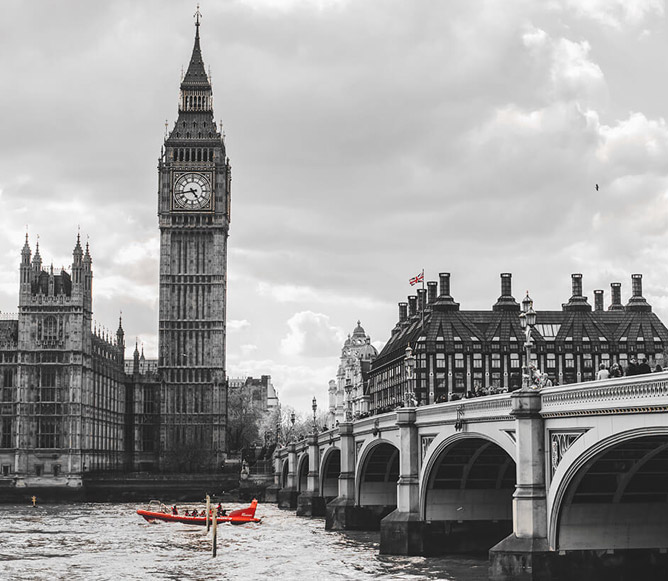

On 21 July 2025, the UK Government made its first major announcement with the establishment of a new pensions commission that could reshape the country’s approach to retirement saving.
Amid the usual political noise from Westminster, this stands out for its potential to deliver lasting structural change and to redefine the state’s role in securing adequate incomes for future pensioners.
The new commission has been tasked with “finishing the job” started by its predecessor in the early 2000s. That earlier body recommended the introduction of workplace pensions with auto-enrolment, one of the most widely cited applications of behavioural economics in UK policymaking. This reform brought millions into pension saving, yet contribution rates remain too low to ensure adequate incomes in later life. The commission will now explore how to increase contributions and strengthen long-term sustainability.
It will also feed into a parallel review of the State Pension age, which will look at international models where pension age automatically adjusts in line with life expectancy. Bob Swarup and Frank Eich analysed similar proposals in 2009, in the wake of the first pensions commission, and their work may be worth revisiting.
The second announcement came with the publication of Sir Jon Cunliffe’s report on the future of the water sector in England and Wales. Sir Jon, a former Second Permanent Secretary to HM Treasury and Deputy Governor of the Bank of England, stresses that the supply of clean water is fundamental to the functioning of society. For this reason, it is often delivered by the public sector, as is the case in Scotland and Northern Ireland. In England and Wales, however, the sector was privatised in the 1980s, with the Government’s role confined to economic regulation via Ofwat.
Sir Jon concludes that this framework has failed to deliver and recommends a fundamental “reset” of the sector. Central to his proposals is the replacement of Ofwat with a new, more integrated regulator and supervisor. This new body would combine oversight of investment, daytoday operations, and longterm resilience.
this context, the Government is focused on two priorities. The first is to contain growth in state pension expenditure, since large increases in annual spending would add strain to the national budget. The second is to fix problems in struggling private utilities by improving regulation and management, thereby avoiding the high costs of taking them into public ownership.
These policy announcements come at a time when public finances are under sustained pressure. In this context, the Government is focused on two priorities. The first is to contain growth in state pension expenditure, since large increases in annual spending would add strain to the national budget. The second is to fix problems in struggling private utilities by improving regulation and management, thereby avoiding the high costs of taking them into public ownership.
However, the return of parts of the rail network to public ownership illustrates a gradual shift in the balance between public and private provision.
Whether the pensions commission and water sector reforms deliver meaningful change or remain at the level of consultation will hinge on political will and fiscal space.
For now, they are clear signals of where government priorities may be heading and will be closely watched by markets and policymakers alike.